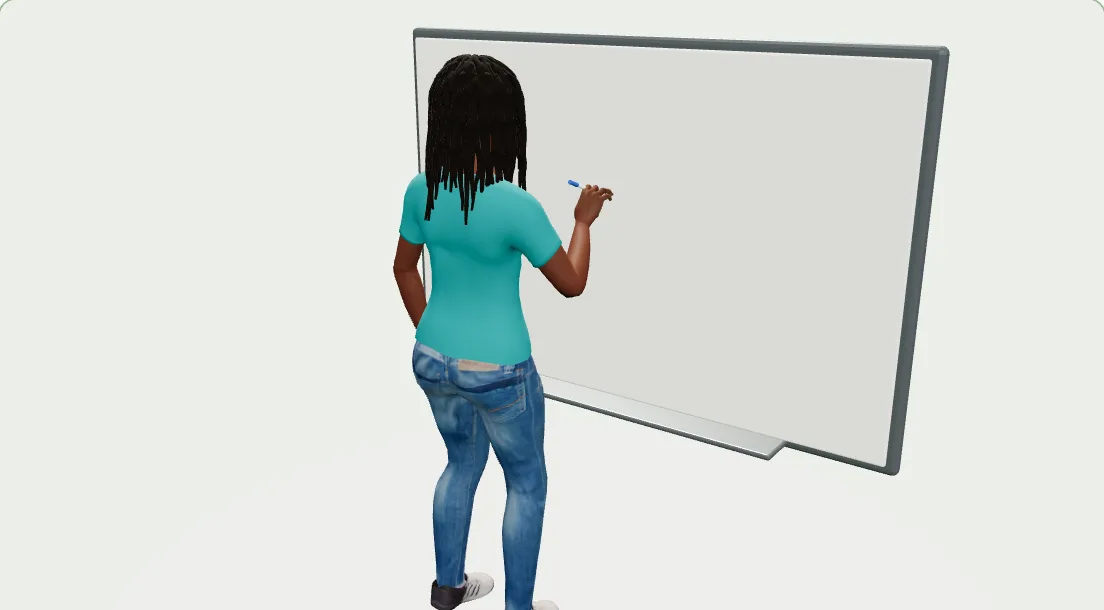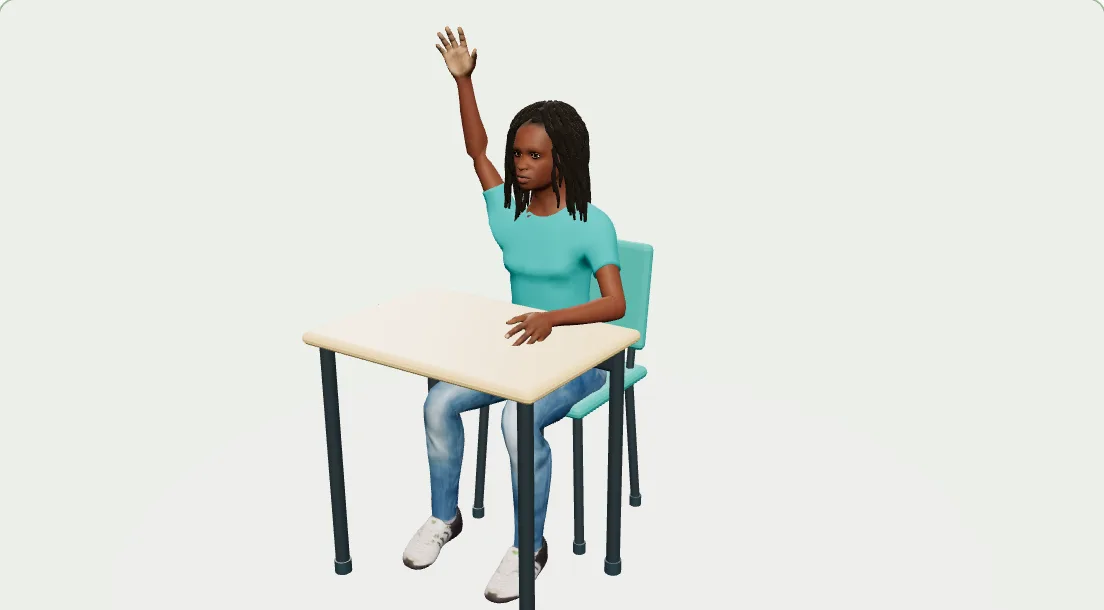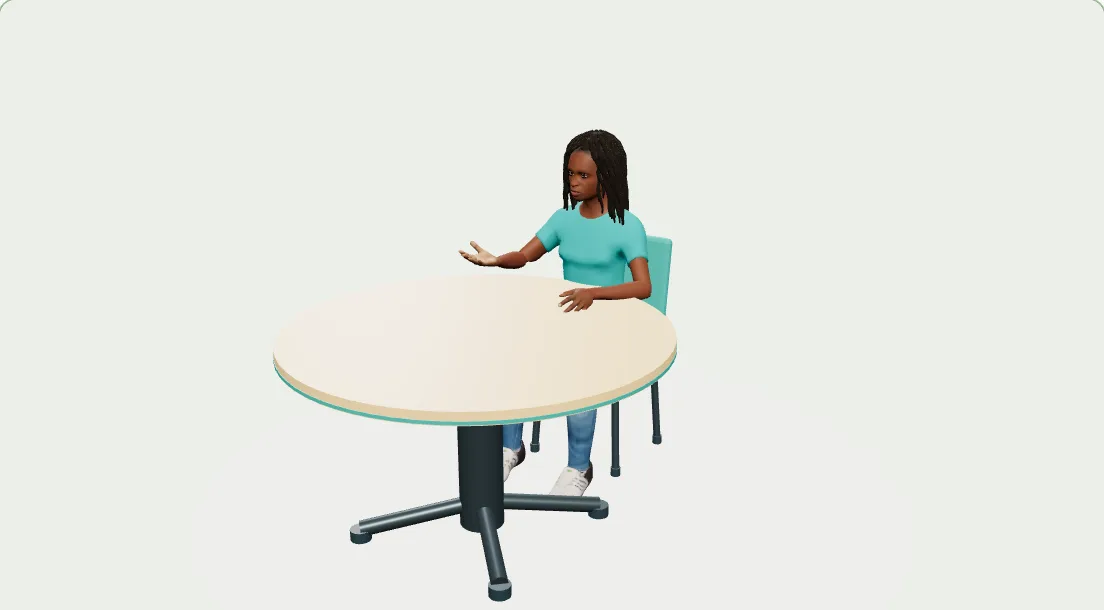
Realistic student avatars
Simulate emotion, behavior, and diverse learner identities so practice feels close to the classroom realities teachers face.
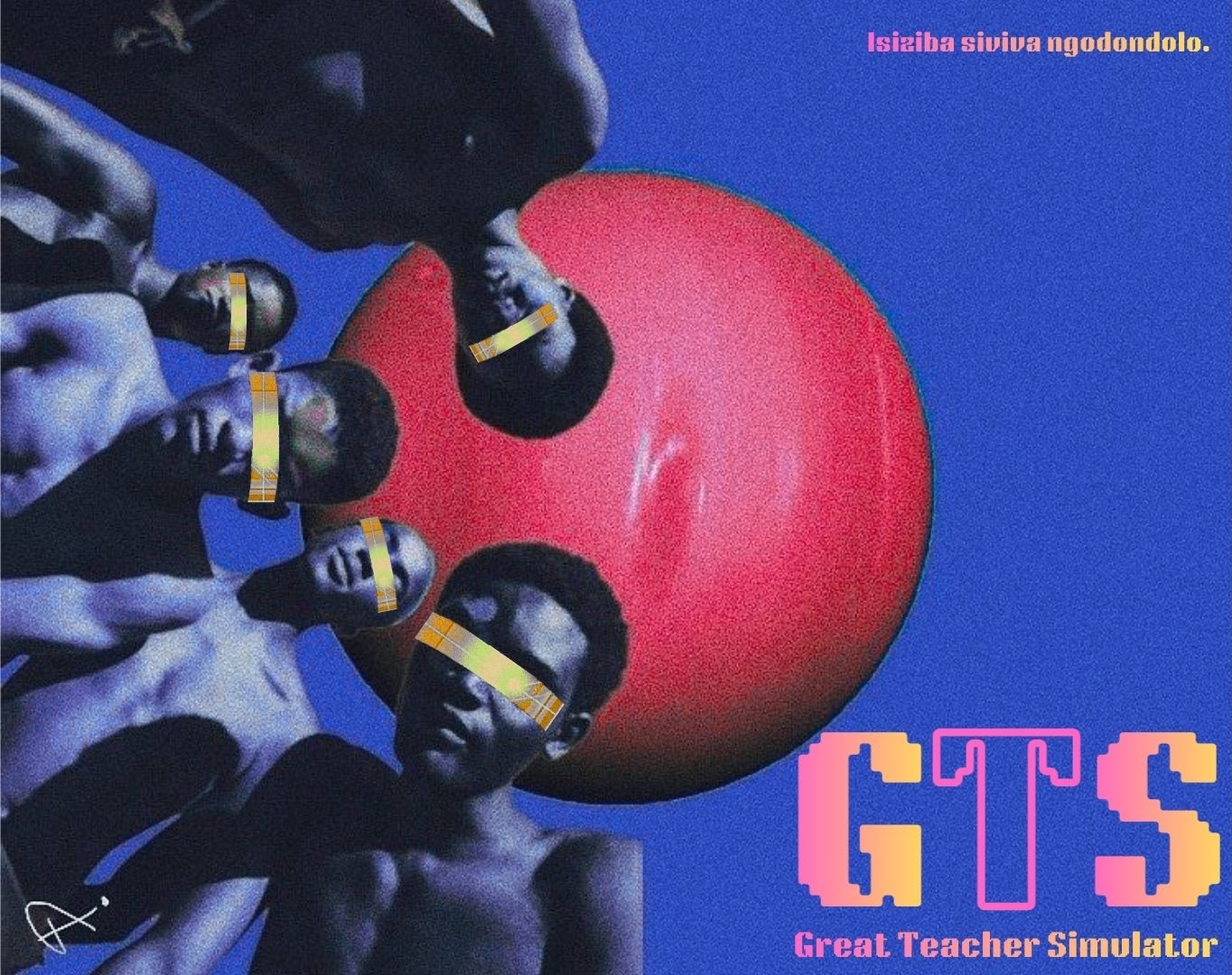
Isiziba siviva ngodondolo.
Great Teacher Simulator
An AI-powered VR classroom where educators rehearse instruction, classroom management, and culturally responsive teaching with student avatars built with dignity and imagination.
GTS is not a simulator of classrooms as they are. It is a simulator of classrooms as they should be — used to train teachers worthy of those classrooms.
01 What it is
Simulate emotion, behavior, and diverse learner identities so practice feels close to the classroom realities teachers face.
Rehearse instruction, reflect with structured prompts, and support growth through coaching-oriented debriefs.
Launch scenarios across content areas with adjustable difficulty and clear metrics to guide improvement.
02 The practice loop
Select grade band, content focus, and classroom dynamics.
Facilitate a live simulation with responsive student avatars.
Review key moments, patterns, and performance indicators.
Repeat targeted practice cycles with coaching support.
03 Scenario catalog
From the first day of school to the incidents no one prepares you for — scenarios are sequenced by difficulty so teachers build confidence step by step.
Daily procedures where small habits set the tone for the year.
Behavior that tests patience, judgment and consistency.
Moments that can escalate — and that students remember.
Layered situations with safety, legal or cultural weight.
Introduce yourself, set expectations and start teaching — while a few students test every boundary.
Decision points
One bathroom request becomes three. One student has been gone twelve minutes.
Decision points
Lining up turns into shoving and shouting, with another teacher watching from the hall.
Decision points
Your principal needs a minute mid-lesson, and the room starts to unravel in seconds.
Decision points
Every redirect earns another joke — and the class's laughter keeps feeding it.
Decision points
Head down, eyes closed. Exhaustion, stress, or boredom — you don't know which yet.
Decision points
Never disruptive, never participating — and weeks in, you're not sure what they've learned.
Decision points
A student refuses to hand over a phone: “It's my property.” Another is filming.
Decision points
You give a simple direction. The student refuses, and the whole class watches what you do next.
Decision points
It started over a pencil. Now insults are flying, sides are forming, and someone stands up.
Decision points
A desk goes over, or a student breaks down in tears — seemingly out of nowhere.
Decision points
Repeated exclusion, a slur in the hallway, threatening messages shown to you on a phone.
Decision points
Punches are thrown, students are filming, and you're the only adult in the room.
Decision points
Unexplained bruises, the same clothes for weeks, or a direct disclosure from a student.
Decision points
A student says something racist, or asks why class only covers one history.
Decision points
Scenarios are drawn from research on early-career teacher attrition and classroom management. GTS is in active development; the catalog grows as scenarios are built and tested.
04 Try it now
Drop your teaching script transcript below. GTS will analyze it with Gemini AI and generate a debrief mapped to MPT research-validated instructional metrics.
Drop your transcript (.txt, .md) or audio (.mp3, .wav, .m4a, .ogg, .webm) or click to browse
No transcript handy?
05 Demo
Preview how a short simulation moves from setup to instruction to actionable reflection.
06 The GTS library
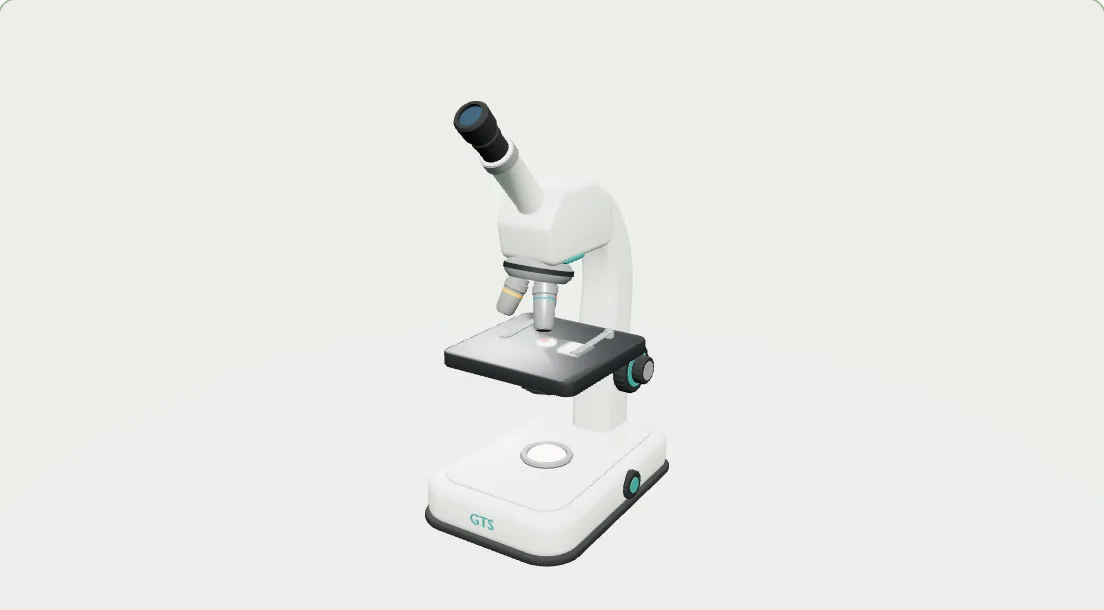
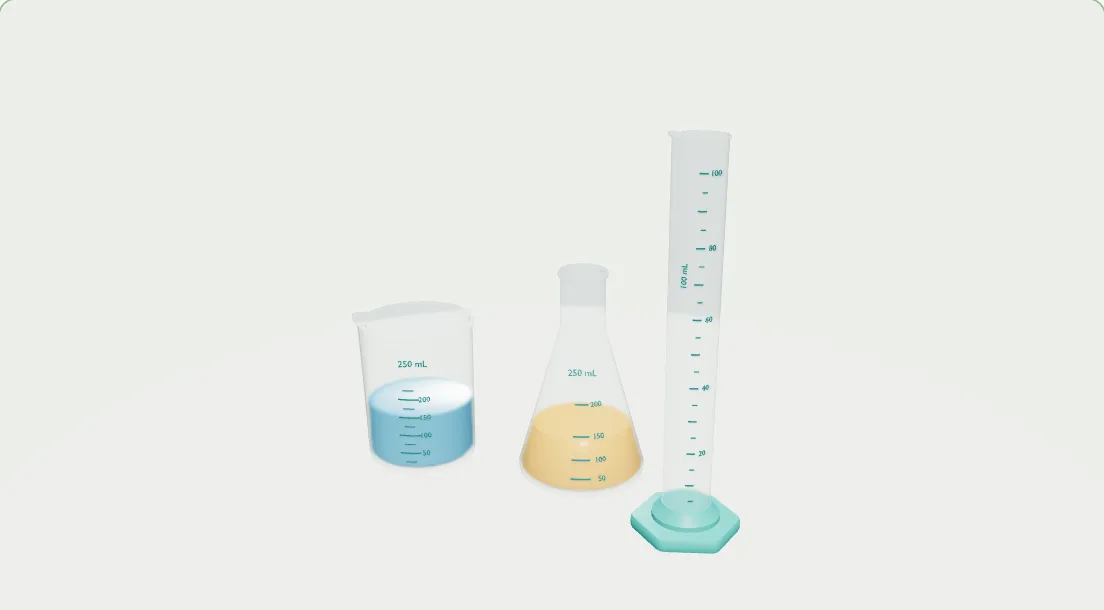
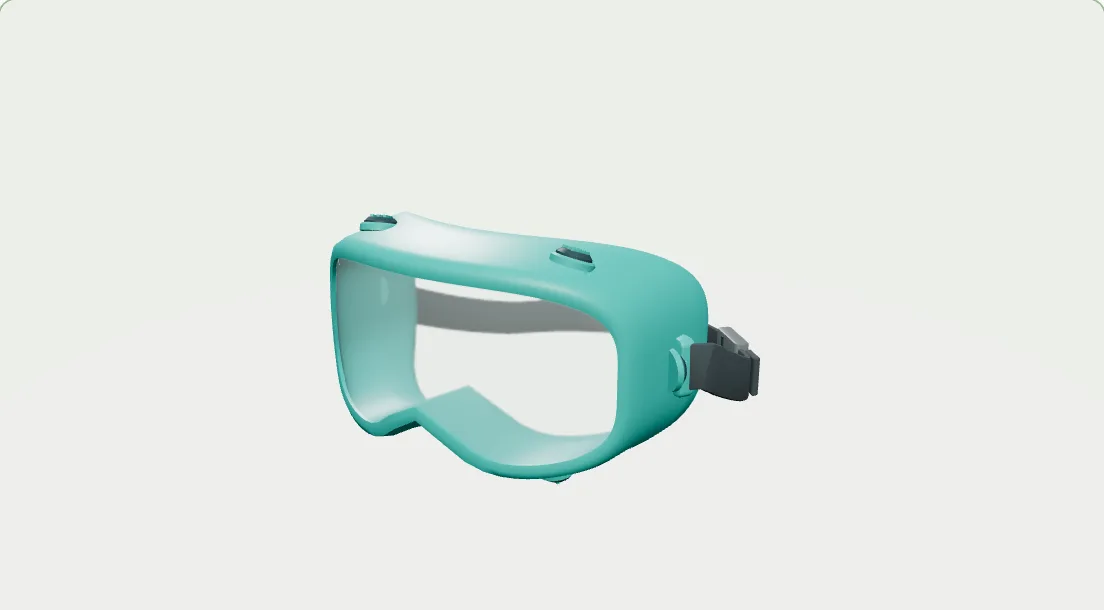
Every student motion and classroom object in GTS is original work, shared on one rig and one standard. Browse them in 3D, then download FBX or GLB files for your own scenes.
07 Principles
GTS is grounded in research-informed instructional practice and built with institutional responsibilities in mind. Our design is privacy-conscious and FERPA-aware, includes clear human review points, and continuously evaluates for bias so simulation results are interpretable and accountable.
08 Plans
Recommended
09 Why we built it
GTS began with a simple question: how can teachers build confidence before high-stakes classroom moments? We created a simulation environment where educators can practice, adapt, and refine instructional choices in realistic settings. Our aim is to strengthen teacher readiness and improve student outcomes through better preparation.
10 Get in touch
Tell us about your context and goals. We'll follow up with a tailored walkthrough.
Prefer email?
dean@greatteachersimulator.com